
Welcome to Sp’s English World 🌍
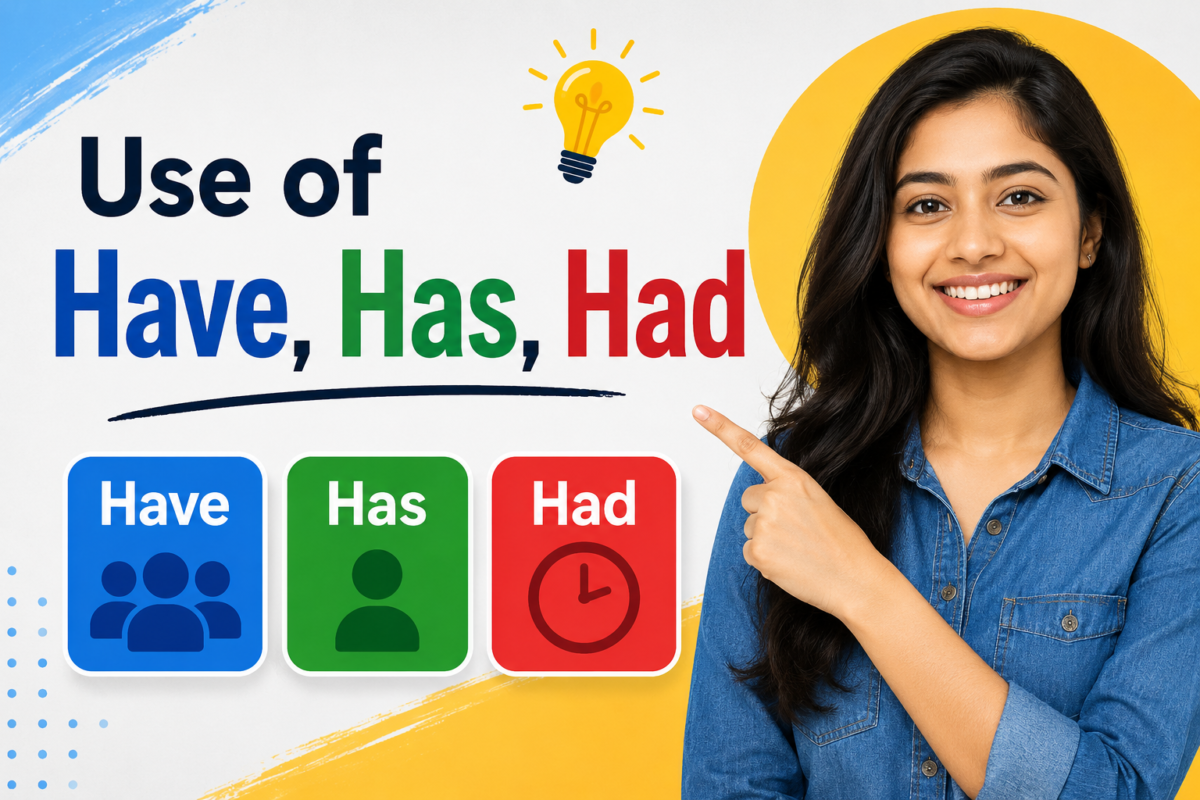
आज आपण इंग्रजीतील खूप महत्त्वाचा topic शिकणार आहोत — Have, Has, Had.
हे words इंग्रजी बोलताना खूप वेळा वापरले जातात. पण अनेकांना confusion असतो की कुठे have, कुठे has आणि कुठे had वापरायचे.
हा blog पूर्ण वाचल्यानंतर तुमचा हा confusion नक्की दूर होईल. 😊
1. Have, Has, Had म्हणजे काय?
हे तिन्ही words मुख्यतः दोन प्रकारे वापरले जातात:
- मालकी / जवळ असणे दाखवण्यासाठी
(Possession) - Perfect Tense मध्ये helping verb म्हणून
2. Use of “Have”
“Have” कुणासोबत वापरतो?
“Have” वापरतो:
- I
- We
- You
- They
- Plural nouns
सोबत.
Structure:
Subject + have + object
Examples:
- I have a pen.
माझ्याकडे पेन आहे. - We have a car.
आमच्याकडे कार आहे. - They have two dogs.
त्यांच्याकडे दोन कुत्रे आहेत. - You have a good idea.
तुझ्याकडे चांगली कल्पना आहे. - My friends have a cricket bat.
माझ्या मित्रांकडे क्रिकेट बॅट आहे.
3. Use of “Has”
“Has” कुणासोबत वापरतो?
“Has” वापरतो:
- He
- She
- It
- Singular noun
सोबत.
Structure:
Subject + has + object
Examples:
- He has a bike.
त्याच्याकडे बाइक आहे. - She has long hair.
तिचे केस लांब आहेत. - It has four legs.
त्याला चार पाय आहेत. - Ram has a new phone.
रामकडे नवीन फोन आहे. - My sister has a beautiful dress.
माझ्या बहिणीकडे सुंदर ड्रेस आहे.
4. Use of “Had”
“Had” कुणासोबत वापरतो?
“Had” हे भूतकाळासाठी (Past) वापरले जाते.
हे सर्व subjects सोबत वापरता येते:
- I
- We
- You
- They
- He
- She
- It
Structure:
Subject + had + object
Examples:
- I had a bicycle.
माझ्याकडे सायकल होती. - She had a headache yesterday.
तिला काल डोकेदुखी होती. - They had a big house.
त्यांच्याकडे मोठे घर होते. - We had a meeting.
आमची बैठक होती. - He had a pet dog.
त्याच्याकडे पाळीव कुत्रा होता.
5. Quick Trick 😊
| Subject | Use |
|---|---|
| I, We, You, They | Have |
| He, She, It | Has |
| Past tense (सर्वांसोबत) | Had |
6. Have, Has, Had as Helping Verbs
हे words helping verb म्हणूनही वापरले जातात.
Present Perfect Tense
Structure:
Subject + have/has + V3
Examples:
- I have finished my work.
मी माझे काम पूर्ण केले आहे. - She has gone to school.
ती शाळेत गेली आहे. - They have completed the project.
त्यांनी प्रोजेक्ट पूर्ण केला आहे.
7. Had in Past Perfect Tense
Structure:
Subject + had + V3
Examples:
- I had finished my homework before dinner.
जेवणापूर्वी मी गृहपाठ पूर्ण केला होता. - She had left before I arrived.
मी येण्यापूर्वी ती निघून गेली होती. - They had watched the movie earlier.
त्यांनी आधीच चित्रपट पाहिला होता.
8. Negative Sentences
Have / Has
Structure:
Subject + do/does not + have
Examples:
- I do not have money.
माझ्याकडे पैसे नाहीत. - She does not have a car.
तिच्याकडे कार नाही. - They do not have enough time.
त्यांच्याकडे पुरेसा वेळ नाही.
Had
Structure:
Subject + did not have
Examples:
- I did not have a phone.
माझ्याकडे फोन नव्हता. - He did not have breakfast.
त्याने नाश्ता केला नव्हता.
9. Questions
Have / Has
- Do you have a pen?
तुझ्याकडे पेन आहे का? - Does she have a laptop?
तिच्याकडे लॅपटॉप आहे का?
Had
- Did he have a bike?
त्याच्याकडे बाइक होती का? - Did they have tickets?
त्यांच्याकडे तिकीट होते का?
10. Common Mistakes ❌
❌ He have a car.
✅ He has a car.
❌ She have long hair.
✅ She has long hair.
❌ I has a pen.
✅ I have a pen.
11. Practice Sentences
मराठीतून इंग्रजी करा:
- माझ्याकडे पुस्तक आहे.
- तिच्याकडे नवीन बॅग आहे.
- त्यांच्याकडे मोठे घर होते.
- आम्ही काम पूर्ण केले आहे.
- त्याने नाश्ता केला नव्हता.
Answers
- I have a book.
- She has a new bag.
- They had a big house.
- We have completed the work.
- He had not eaten breakfast.
Conclusion
आज आपण Have, Has, Had चा वापर अगदी सोप्या भाषेत शिकलो.
जर तुम्ही रोज थोडा सराव केला तर हे topic खूप सहज समजेल आणि इंग्रजी बोलताना confidence वाढेल. ✨
अशाच सोप्या पद्धतीने इंग्रजी शिकण्यासाठी Sp’s English World ला follow करत रहा. 💙
Zabrdsat 👌🏻 namaste good work 👏 best English Grammreally respect 🙏🏻 🫡