
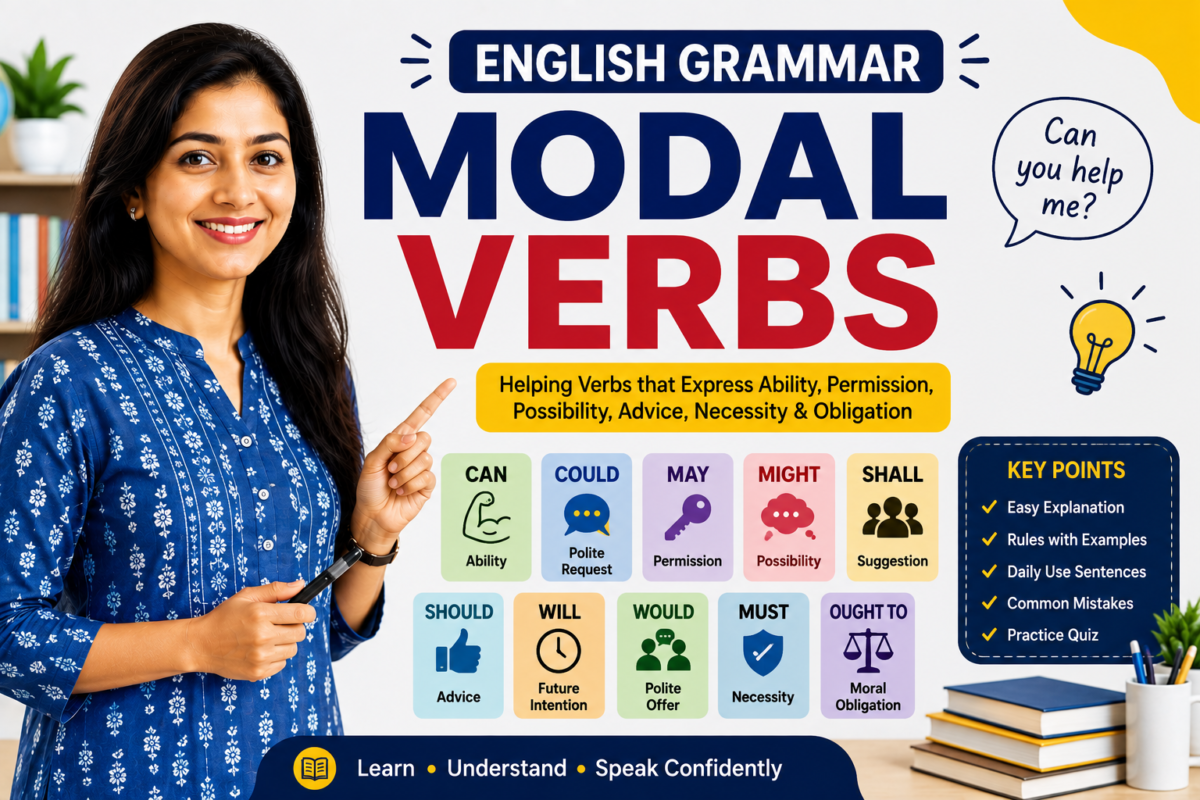
Modal Verbs म्हणजे काय?
Modal Verbs हे Auxiliary Verbs (Helping Verbs) चा एक विशेष प्रकार आहेत. ते क्षमता (Ability), परवानगी (Permission), शक्यता (Possibility), सल्ला (Advice), कर्तव्य (Obligation), आवश्यकता (Necessity), विनंती (Request), ऑफर (Offer) किंवा भविष्य (Future Intention) व्यक्त करण्यासाठी वापरले जातात.
Modal Verb नंतर नेहमी Main Verb चे Base Form (V1) वापरले जाते.
सोपी व्याख्या
A Modal Verb is a helping verb that expresses ability, permission, possibility, advice, necessity, or obligation.
मराठीत: क्षमता, परवानगी, शक्यता, सल्ला, आवश्यकता किंवा कर्तव्य व्यक्त करणाऱ्या सहाय्यकारी क्रियापदांना Modal Verbs म्हणतात.
Modal Verbs का शिकावे?
दैनंदिन इंग्रजी संभाषणात Modal Verbs चा खूप मोठ्या प्रमाणावर वापर होतो.
उदाहरण:
- Can you help me?
- You should drink more water.
- We must follow the rules.
- It might rain today.
Modal Verbs मुळे तुमचे इंग्रजी अधिक नैसर्गिक आणि नम्र वाटते.
Modal Verbs ची यादी
- Can
- Could
- May
- Might
- Shall
- Should
- Will
- Would
- Must
- Ought to
प्रत्येक Modal Verb चा वापर
1. Can
उपयोग
- क्षमता
- अनौपचारिक परवानगी
- विनंती
उदाहरणे
- I can swim.
- Can I use your phone?
- Can you help me?
2. Could
उपयोग
- भूतकाळातील क्षमता
- नम्र विनंती
- शक्यता
उदाहरणे
- I could run fast when I was young.
- Could you repeat that?
- It could be true.
3. May
उपयोग
- औपचारिक परवानगी
- शक्यता
उदाहरणे
- May I come in?
- It may rain today.
4. Might
उपयोग
- कमी शक्यता
उदाहरणे
- She might come later.
- We might miss the train.
5. Will
उपयोग
- भविष्य
- वचन
- निर्णय
उदाहरणे
- I will call you tomorrow.
- We will finish this work.
6. Would
उपयोग
- नम्र विनंती
- ऑफर
- कल्पित परिस्थिती
उदाहरणे
- Would you like some tea?
- I would help you if I had time.
7. Shall
उपयोग
- सूचना
- प्रस्ताव (मुख्यतः I/We सोबत)
उदाहरणे
- Shall we begin?
- Shall I open the window?
8. Should
उपयोग
- सल्ला
- शिफारस
उदाहरणे
- You should study every day.
- We should respect our parents.
9. Must
उपयोग
- आवश्यकता
- कर्तव्य
- ठाम सूचना
उदाहरणे
- You must wear a helmet.
- Students must follow school rules.
10. Ought to
उपयोग
- नैतिक कर्तव्य
- योग्य सल्ला
उदाहरणे
- You ought to tell the truth.
- We ought to help others.
Modal Verbs चा महत्त्वाचा नियम
Modal Verb + Base Form (V1)
✔ She can dance.
✔ We should learn English.
✔ They will come tomorrow.
❌ She can dances.
❌ He should goes.
Can, Could आणि May मधील फरक
| Modal | उपयोग | उदाहरण |
|---|---|---|
| Can | क्षमता / अनौपचारिक परवानगी | Can you swim? |
| Could | नम्र विनंती / भूतकाळातील क्षमता | Could you help me? |
| May | औपचारिक परवानगी | May I come in? |
Must आणि Should मधील फरक
| Must | Should |
|---|---|
| आवश्यक / बंधनकारक | सल्ला / शिफारस |
| You must wear a seat belt. | You should sleep early. |
Daily Use Sentences
घरात
- Can you close the door?
- You should eat healthy food.
- We must keep the house clean.
- May I watch TV?
- I will help you.
शाळेत
- Students must wear their uniforms.
- May I ask a question?
- You should complete your homework.
- We can solve this problem.
- Shall we start the lesson?
ऑफिसमध्ये
- Could you send me the report?
- We will finish the project today.
- You should attend the meeting.
- Employees must follow company policies.
- Would you like some coffee?
दैनंदिन संभाषण
- Can I help you?
- It might rain this evening.
- We may visit Pune tomorrow.
- I would like to learn English.
- You ought to exercise regularly.
विद्यार्थ्यांकडून होणाऱ्या सामान्य चुका
❌ He can sings.
✅ He can sing.
❌ She should goes.
✅ She should go.
❌ I must to study.
✅ I must study.
❌ Could you to help me?
✅ Could you help me?
❌ He will comes tomorrow.
✅ He will come tomorrow.
Speaking Practice
खालील वाक्यांचे इंग्रजीत भाषांतर करा.
- मी पोहू शकतो.
- मी आत येऊ का?
- तू मला मदत करू शकशील का?
- तुला रोज अभ्यास करायला हवा.
- आपण आता सुरुवात करूया का?
- आज पाऊस पडू शकतो.
- मला तुला उद्या फोन करेन.
- विद्यार्थ्यांनी वेळेवर यायला हवे.
- आपण नियम पाळलेच पाहिजेत.
- मला इंग्रजी शिकायचे आहे.
Mini Quiz
1. “You ___ wear a helmet.”
A) Can
B) Must
C) Might
उत्तर: B
2. “___ I come in?”
A) May
B) Must
C) Should
उत्तर: A
3. “He can ___.”
A) goes
B) going
C) go
उत्तर: C
4. “Would you like some tea?” हे कोणत्या उपयोगासाठी आहे?
A) क्षमता
B) ऑफर
C) बंधन
उत्तर: B
Frequently Asked Questions (FAQs)
1. Modal Verbs म्हणजे काय?
क्षमता, परवानगी, शक्यता, सल्ला किंवा कर्तव्य व्यक्त करणाऱ्या Helping Verbs ला Modal Verbs म्हणतात.
2. Modal Verb नंतर कोणता Verb वापरतात?
नेहमी Base Form (V1) वापरतात.
उदा.:
- Can play
- Should study
- Will come
3. सर्वाधिक वापरले जाणारे Modal Verbs कोणते?
Can, Could, May, Might, Shall, Should, Will, Would, Must, Ought to.
4. Must आणि Should मध्ये काय फरक आहे?
Must = आवश्यक / बंधनकारक
Should = सल्ला / शिफारस
विद्यार्थ्यांसाठी सराव
खालील प्रत्येक Modal Verb वापरून किमान 3 वाक्ये तयार करा.
- Can
- Could
- May
- Might
- Shall
- Should
- Will
- Would
- Must
- Ought to
यानंतर तुमच्या दैनंदिन जीवनातील 10 प्रसंग लिहा आणि प्रत्येक प्रसंगासाठी योग्य Modal Verb वापरा.
निष्कर्ष
Modal Verbs हे इंग्रजी संभाषणातील सर्वात जास्त वापरले जाणारे Helping Verbs आहेत. योग्य Modal Verb वापरल्यामुळे तुमचे बोलणे अधिक नम्र, स्पष्ट आणि प्रभावी बनते. Spoken English, Writing Skills, मुलाखती, शालेय अभ्यास आणि स्पर्धा परीक्षांमध्ये त्यांचे ज्ञान अत्यंत महत्त्वाचे आहे. नियम समजून घ्या, दररोज उदाहरणांचा सराव करा आणि प्रत्यक्ष संभाषणात त्यांचा वापर करण्याचा प्रयत्न करा.
पुढे काय शिका?
Modal Verbs नंतर खालील विषयांचा अभ्यास करा.
- Main Verbs
- Subject–Verb Agreement
- Active & Passive Voice
- Direct & Indirect Speech
- Conditional Sentences
- Tenses – Complete Guide